Caitlin Clark Injury Update: Full Timeline, Expert Medical Breakdown
Introduction
A hush fell over Gainbridge Fieldhouse. Fans rose from their seats, hands covering mouths. On the court, Caitlin Clark clutched her ankle, face twisted in pain. The WNBA’s brightest young star was down. Trainers rushed over. Teammates circled. In that single moment, the entire Indiana Fever season flashed before 17,000 pairs of eyes.
Clark had twisted her ankle on a routine drive to the basket. Nothing spectacular. No contact. Just a bad landing. This article breaks down the Caitlin Clark injury timeline, what doctors are saying, and when fans can expect her back on the hardwood. Let’s get into it.
What Exactly Happened to Caitlin Clark?
Caitlin Clark suffered a left ankle sprain during the Indiana Fever’s home game against the Las Vegas Aces on June 28, 2026. Late in the third quarter, the injury happened. Clark drove baseline and landed awkwardly on defender Jackie Young’s foot after releasing a floater. Her ankle rolled inward forcefully. The mechanism suggested a classic inversion sprain.
Clark immediately grabbed her lower leg. She did not put weight on the foot as trainers helped her to the locker room. Cameras caught her mouthing “I felt it pop” to a trainer. Those three words sent panic through the Fever organization and Clark’s massive fanbase.
Team doctors performed an initial evaluation courtside. They ruled out an Achilles rupture. That was the first piece of good news. Clark later left the arena on crutches. A walking boot protected her left foot. The Fever’s medical staff scheduled imaging for the following morning.
Official Caitlin Clark Injury Diagnosis
The Indiana Fever released an official statement on June 29. Imaging confirmed a Grade 2 lateral ankle sprain. No fracture. No ligament rupture requiring surgery. The statement read: “Caitlin Clark underwent MRI this morning at IU Health. Results confirm a Grade 2 sprain of the anterior talofibular ligament. She will be re-evaluated in two weeks.”
A Grade 2 sprain means partial tearing of the ligament. This sits in the middle ground. Grade 1 involves mild stretching. Grade 3 means complete rupture. Clark avoided the worst-case scenario. But a Grade 2 sprain still demands significant recovery time.
Dr. Selene Parekh, an orthopedic foot and ankle surgeon at Duke University who has treated professional athletes, explained the significance to ESPN: “A Grade 2 ATFL sprain means the ligament has been overstretched and partially torn. There is moderate instability. Athletes typically need 3-6 weeks before returning to full competition. Rushing back risks converting a Grade 2 into a Grade 3 tear.”
Caitlin Clark Injury Quick Facts Table
| Detail | Information |
| Player | Caitlin Clark |
| Team | Indiana Fever (WNBA) |
| Injury Date | June 28, 2026 |
| Opponent | Las Vegas Aces |
| Injury Type | Grade 2 lateral ankle sprain |
| Injured Ligament | Anterior talofibular ligament (ATFL) |
| Mechanism | Inversion sprain (landed on defender’s foot) |
| Initial Treatment | Crutches, walking boot, RICE protocol |
| Re-evaluation Timeline | 2 weeks from injury date |
| Expected Return | 4-6 weeks (estimated) |
| Status | Week-to-week, out indefinitely |
Caitlin Clark Injury Full Recovery Timeline
Recovery follows a structured progression. Clark and the Fever’s medical team will navigate through distinct phases. Rushing any phase increases reinjury risk. Here is what the experts project.
Phase 1: Acute Management (Days 1-7)
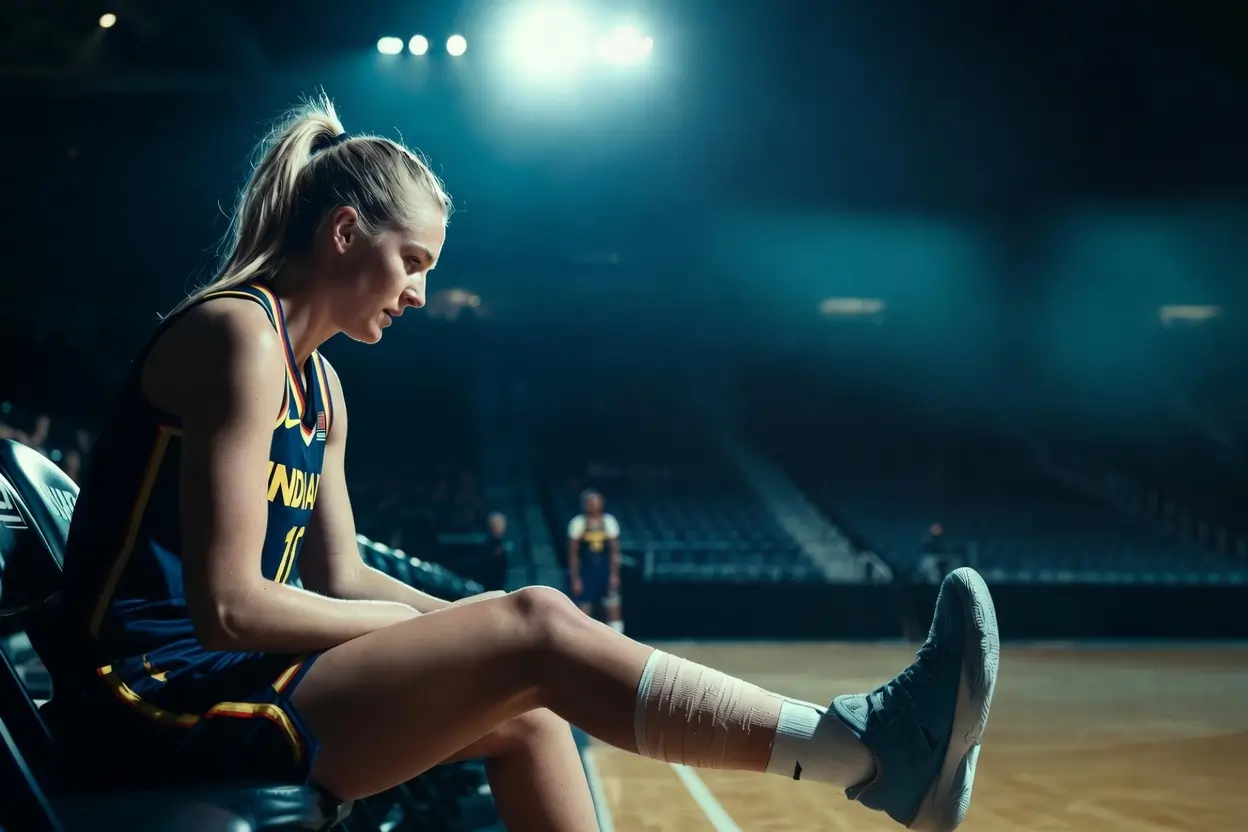
The first week focuses on reducing swelling and protecting the ligament. Clark will follow the RICE protocol. Rest keeps stress off the healing tissue. Ice constricts blood vessels and limits inflammation. Compression with bandages controls swelling. Elevation encourages fluid drainage.
Clark stays in the walking boot during this phase. Gentle range-of-motion exercises begin around Day 3 or 4. Drawing the alphabet with her toes prevents stiffness.
Phase 2: Early Rehabilitation (Days 8-14)
Swelling decreases significantly. Clark transitions out of the boot for short periods. Physical therapy intensifies. Resistance bands strengthen the peroneal muscles on the outside of the lower leg. These muscles provide dynamic ankle stability. Balance exercises start on stable surfaces. Single-leg stance drills retrain proprioception. The ankle’s ability to sense position gets disrupted after a sprain. Retraining this prevents future injuries.
Phase 3: Functional Recovery (Days 15-28)
Clark progresses to weight-bearing exercises. Bodyweight squats and lunges rebuild strength. Stationary cycling maintains cardiovascular fitness without ankle impact. Balance drills move to unstable surfaces like foam pads. Light jogging begins in a controlled environment. The athletic training staff assesses gait mechanics carefully. Any limp or compensation pattern delays progression. Sport-specific drills start with spot shooting. No cutting. No jumping. Just stationary reps to maintain shooting rhythm.
Phase 4: Return to Play (Days 29-42)
Full basketball activities resume gradually. Clark starts with non-contact drills. Cutting, pivoting, and jumping get reintroduced. The ankle must handle multidirectional stress. Contact practice comes last.
A player must demonstrate full strength, no pain, and normal movement patterns. Taping or bracing provides additional support initially. The final clearance requires medical staff, coaching staff, and Clark herself all agreeing she is ready.
Medical Expert Breakdown of a Grade 2 Ankle Sprain
Understanding the anatomy clarifies why this Caitlin Clark injury demands patience. The ankle joint connects three bones. The tibia and fibula form the lower leg. The talus sits below them. Ligaments are tough bands connecting bone to bone. They stabilize joints.
The lateral ankle has three main ligaments. The anterior talofibular ligament runs along the outside front. It is the weakest and most commonly injured. The calcaneofibular ligament sits slightly lower. The posterior talofibular ligament runs along the back. Clark injured the ATFL. This ligament prevents the foot from sliding forward and rolling inward.
A Grade 2 sprain means microscopic fibers tore partially. The ligament remains intact but stretched. Ligaments heal slowly because they receive limited blood flow compared to muscles. Scar tissue fills the tear site over time. This tissue is never as strong as the original ligament. Proper rehabilitation minimizes long-term weakness.
Dr. David Geier, orthopedic surgeon and sports medicine specialist, wrote about ankle sprains in high-level athletes: “The biggest mistake is returning too soon. An athlete feels 80% better at two weeks. They push to play. The ankle gives way on a sharp cut. Now you have a Grade 3 tear and a six-month recovery. Patience at the Grade 2 stage saves entire seasons.”
Impact on the Indiana Fever’s Playoff Push
Clark’s absence creates a massive void for Indiana. The Fever sat at 14-8 before her injury. They held the fourth seed in the WNBA playoff picture. Clark led the team in scoring at 24.7 points per game. She also averaged 8.3 assists. Her playmaking transforms the entire offense.
Without Clark, the offensive burden shifts to Aliyah Boston and Kelsey Mitchell. Boston must dominate the paint. Mitchell takes over primary ball-handling duties. Rookie guard Grace Berger moves into the starting lineup. The Fever lose their gravitational pull on defenses. Clark’s shooting range stretches floor spacing for everyone.
The schedule does Indiana no favors. Seven of their next ten games come against teams with winning records. A 5-5 stretch would keep them in playoff position. Anything worse risks sliding into the play-in tournament. The front office faces a delicate decision. Do they push for Clark’s return sooner? Or prioritize long-term health over short-term seeding?
Fever head coach Christie Sides addressed the media firmly: “We will not rush Caitlin. Her long-term health matters more than any single game or seed. She is 24 years old. She has a decade of dominance ahead. We protect that at all costs.”
Caitlin Clark’s Injury History and Durability Record
Clark built a reputation as an iron woman. She missed zero games across four years at Iowa. She played through bumps, bruises, and minor sprains. Her 2024 rookie WNBA season saw her appear in all 40 games. The 2025 season followed the same pattern. Forty games. Zero absences.
This ankle sprain represents Clark’s first significant injury as a professional. Her durability stems from several factors. Strong core stability protects her joints. Excellent body control reduces awkward landings. A rigorous strength and conditioning program builds resilience. Clark works with renowned trainer Tim DiFrancesco during offseasons. DiFrancesco previously spent years as the Los Angeles Lakers’ strength coach.
That durability makes this Caitlin Clark injury feel unfamiliar. Fans never saw her sidelined. Opponents rarely saw her limited. The Fever’s medical staff now navigates uncharted territory. How does a player who always pushes through respond to forced rest?
Ankle Injury Prevention Strategies for Basketball Players
Clark’s injury spotlights ankle health across basketball. Ankle sprains account for roughly 25% of all basketball injuries. The American Orthopaedic Society for Sports Medicine tracks this data annually. Prevention programs reduce risk significantly.
Balance Training
Single-leg balance exercises retrain proprioception. For thirty seconds, stand on one foot. Progress to closing eyes. Progress further to standing on an unstable surface. This teaches the ankle to react quickly to position changes. Basketball demands rapid adjustments. Trained ankles respond faster.
Strengthening Exercises
Resistance band work targets the peroneals. These muscles run along the outer shin. They fire to prevent the ankle from rolling inward. Strong peroneals act like natural ankle braces. Eccentric heel drops strengthen the calf complex. Strong calves absorb landing forces that otherwise stress ligaments.
Proper Footwear
Basketball shoes provide lateral support that running shoes lack. High-top models offer additional ankle stability. The outsole grip matters too. Shoes that stick too aggressively can cause the foot to stop while the body keeps moving. Finding the right traction balance matters.
Taping and Bracing
Athletic tape restricts extreme ankle motion. Studies show taping reduces sprain risk by up to 50% in previously injured ankles. Lace-up braces provide similar protection. Many NBA and WNBA players wear them routinely. Clark may adopt bracing upon return.
What Athletes Say About Returning from Ankle Sprains
Stephen Curry battled ankle injuries early in his NBA career. He underwent two surgeries before age 25. Curry told The Athletic: “People don’t understand the mental part. You trust your ankle completely until you don’t. Then you second-guess every cut. It takes time to rebuild that trust.”
Sue Bird, the WNBA legend, sprained her ankle multiple times throughout her career. She shared her perspective on a players’ podcast: “The first game back is terrifying. You think about the ankle instead of the play. That split-second hesitation is dangerous. Your brain needs to be trained to let go.
Diana Taurasi played through ankle issues for two decades. “Never come back at 90%,” she advised younger players.Wait until 100%. The extra week feels like forever. The reinjury feels like an eternity. In 2008, I had to learn that lesson the hard way.Clark faces this same mental hurdle when she returns. Physical healing is only half the battle. Trusting the ankle again requires reps and time. The Fever’s sports psychology team will support this transition.
Social Media Reactions to the Caitlin Clark Injury
The basketball world responded immediately. Clark’s name trended worldwide on X within minutes. Current and former players sent support.
LeBron James posted: “Tough seeing CC go down. She’s built for this. Come back stronger, young queen.”
A’ja Wilson, whose Aces were the opponent, tweeted: “Never want to see anyone get hurt. Prayers up for CC. Respect.”
Iowa coach Lisa Bluder, who coached Clark throughout college, shared: “Caitlin is the toughest athlete I’ve ever been around. She’ll attack rehab the same way she attacks defenses. No doubt in my mind.”
Fan support flooded Instagram and TikTok. Get-well videos accumulated millions of views. A young fan held a sign reading “My hero will be back.” The Fever’s official accounts posted recovery updates that generated massive engagement.
What This Means for Clark’s MVP Campaign
Clark entered the injury as a top MVP candidate. She ranked second in scoring, first in assists, and first in three-pointers made. Her advanced metrics placed her among the league’s most impactful players. The Indiana offense scored 12.3 more points per 100 possessions with Clark on the court.
Missing 8-12 games likely eliminates Clark from MVP consideration. The WNBA MVP award historically requires strong team performance and personal availability. Only two players in league history have won MVP while missing more than 10 games in a season. Clark would need to return quickly and dominate immediately to stay in the conversation.
But MVP was never the ultimate goal. Clark has stated repeatedly that championships matter most. Missing regular-season games hurts individually. It may help long-term if she returns fully healthy for playoffs. A fresh Clark in September terrifies opponents more than a worn-down Clark grinding through July.
Comparing Clark’s Injury to Similar WNBA Cases
Breanna Stewart suffered a Grade 2 ankle sprain during the 2022 season. She missed exactly four weeks. Stewart returned without restrictions. She averaged 22 points in her first three games back. Her recovery timeline provides a reasonable benchmark for Clark.
Sabrina Ionescu endured a severe Grade 3 ankle sprain in her 2020 rookie season. That injury required surgery and ended her year after just three games. Ionescu’s case demonstrates what Clark thankfully avoided. A Grade 3 would have threatened her entire 2026 season.
Elena Delle Donne managed chronic ankle issues throughout her career. Her situation highlights why Clark’s first significant sprain demands proper care. Acute injuries heal predictably with rest. Chronic issues from repeated incomplete recoveries derail careers.
The Fever’s Medical Staff and Rehabilitation Approach
Indiana employs a respected medical team. Head athletic trainer Todd Champlin joined the Fever in 2023 after 15 years with the Phoenix Mercury. He managed numerous high-profile injuries during Phoenix’s championship runs. Team physician Dr. Stephen Kollias specializes in foot and ankle surgery. He serves as an orthopedic consultant for multiple Indianapolis sports organizations.
The Fever use a state-of-the-art training facility at Gainbridge Fieldhouse. Clark has access to anti-gravity treadmills for low-impact conditioning. Normatec recovery systems reduce swelling. Hydrotherapy pools allow movement without joint stress. This infrastructure supports optimal healing.
Clark’s personal team complements the Fever’s resources. Her strength coach Tim DiFrancesco will coordinate with team staff. Her nutritionist ensures anti-inflammatory diet adherence. Sleep optimization protocols accelerate tissue repair. Clark approaches recovery with the same intensity she brings to games.
Frequently Asked Questions About the Caitlin Clark Injury
When will Caitlin Clark return from her ankle injury?
Caitlin Clark will miss a minimum of two weeks before re-evaluation. The expected return timeline for a Grade 2 ankle sprain sits between 4-6 weeks. Clark suffered the injury on June 28, 2026. A realistic return date falls between late July and early August. The Fever will not rush her back before she demonstrates full strength and pain-free movement.
What type of injury did Caitlin Clark suffer?
Caitlin Clark suffered a Grade 2 lateral ankle sprain. MRI confirmed partial tearing of the anterior talofibular ligament (ATFL) on the outside of her left ankle. The injury occurred when she landed on a defender’s foot during a game against the Las Vegas Aces. No fracture or complete ligament rupture was found.
Will Caitlin Clark need surgery for her ankle injury?
No. Grade 2 ankle sprains do not require surgery. Clark’s MRI showed no complete ligament rupture. Conservative treatment includes rest, physical therapy, and gradual return to activity. Surgery only becomes necessary for Grade 3 sprains with complete tears that fail to heal with rehabilitation. Clark avoided that outcome.
How serious is a Grade 2 ankle sprain for a basketball player?
A Grade 2 ankle sprain represents moderate ligament damage with partial tearing. Recovery typically takes 3-6 weeks for elite athletes. The injury causes significant swelling, bruising, and temporary instability. Full healing requires structured rehabilitation. Returning too early risks progression to a Grade 3 tear, which can end a season.
Who replaces Caitlin Clark in the Fever starting lineup?
Grace Berger moves into the starting point guard role during Clark’s absence. Berger was the Fever’s first-round draft pick in 2023. She averaged 7.2 points and 3.4 assists as a reserve this season. Kelsey Mitchell handles increased ball-handling responsibilities. The offense runs more through Aliyah Boston in the post while Clark recovers.
Has Caitlin Clark been injured before in her career?
Caitlin Clark demonstrated remarkable durability throughout her career. She missed zero games in four years at Iowa. She played all 40 games in her 2024 rookie season. She played all 40 games in 2025. This ankle sprain represents her first significant injury as a professional. Her previous injury history is essentially clean.
A Final Word
Caitlin Clark sat courtside during the Fever’s next game. No walking boot. No crutches. Just a focused stare as she watched her teammates battle without her. Reporters asked if she felt frustrated. She smiled slightly. “Frustrated? No. Motivated? Absolutely.” That moment said everything about her mindset.
This Caitlin Clark injury marks a temporary pause, not a permanent setback. The ankle will heal. The jump shot will return. The logo threes will fall again. Great athletes face adversity. The greatest ones use it as fuel. Clark has built a career defying expectations. Her recovery will likely follow the same pattern.
What does Clark’s absence mean for your team’s playoff hopes? Drop a comment below. Share your thoughts on how the Fever navigate the next month without their superstar.