Ryomen Sukuna: The Complete Guide to Jujutsu Kaisen’s King of Curses
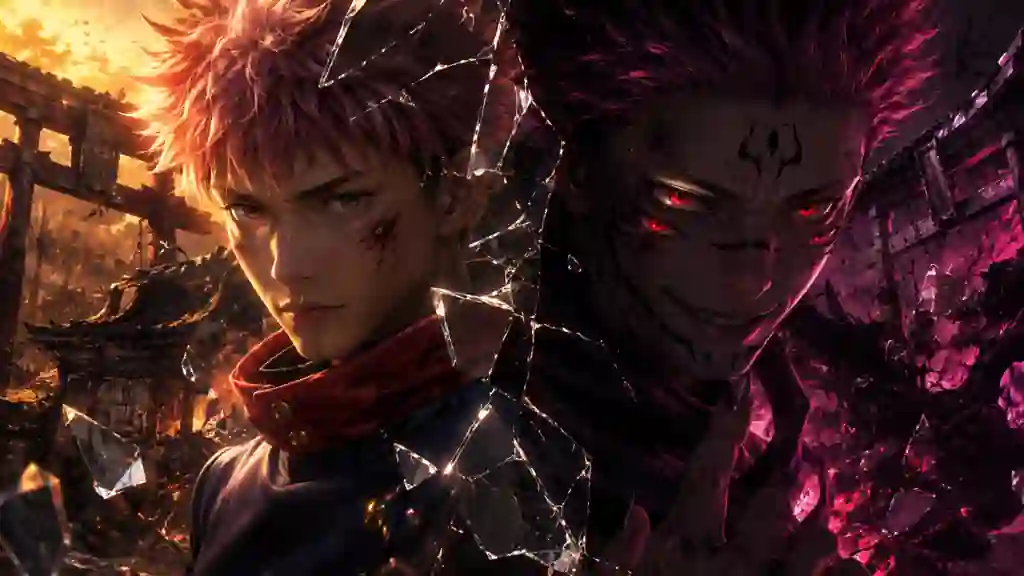
Who is Ryomen Sukuna beyond the fearsome reputation? Known as the undisputed King of Curses, Ryomen Sukuna isn’t just raw power—he is a millennia-old enigma walking inside Yuji Itadori’s body. This definitive guide unpacks his origin, techniques, and the terrifying philosophy that makes him Jujutsu Kaisen’s most captivating villain.
Who Is Ryomen Sukuna? Origin and Mythological Roots
Ryomen Sukuna’s legend begins over a thousand years ago during Japan’s Heian era, the golden age of jujutsu sorcery. In Jujutsu Kaisen lore, he was not born a curse but a human sorcerer whose malevolence and strength transcended death itself.
During his human life, Ryomen Sukuna slaughtered countless sorcerers and curses alike, enjoying the act of destruction purely for entertainment. His four-armed, two-faced appearance—mirroring the “Ryomen” (two-faced) name—became synonymous with absolute terror. Upon death, his immense cursed energy refused to dissipate; instead, it crystallized into 20 indestructible fingers, each housing a fragment of his soul.
Real-world mythology offers a parallel. The historical Ryomen Sukuna appears in the ancient chronicle Nihon Shoki as a rebellious figure with two faces and multiple limbs who defied the emperor. Gege Akutami, Jujutsu Kaisen’s creator, drew heavily from this legend, blending historical text with modern dark fantasy to craft Ryomen Sukuna’s terrifying persona.
Primary Source: Nihon Shoki (The Chronicles of Japan), compiled 720 AD—mentions a “Ryomen Sukuna” figure in Hida Province. (Referenced via Japanese historical archives)
The 20 Fingers: How Ryomen Sukuna Was Split
After his death, Ryomen Sukuna’s soul fragmented into 20 cursed objects—mummified fingers impossible to destroy. Jujutsu sorcerers sealed these fingers across Japan, hiding them in temples, underground vaults, and warded locations. Each finger pulses with a unique cursed energy signature that attracts curses and corrupts any human nearby.
Yuji Itadori’s consumption of the first finger changed everything. By ingesting the cursed object, Yuji became Ryomen Sukuna’s vessel—a one-in-a-million compatibility that allowed the King of Curses to speak, observe, and occasionally seize control. Currently, Yuji has consumed all 20 fingers, making Ryomen Sukuna fully incarnated but bound to a host body he constantly fights to dominate.
The Binding Vow between Yuji and Ryomen Sukuna represents one of the series’ central tensions. Yuji can suppress Ryomen Sukuna’s consciousness, but the curse exploits every loophole—such as the “Enchain” vow allowing him one minute of free control under specific conditions.
Ryomen Sukuna’s True Form and Physical Appearance
Ryomen Sukuna’s true form emerges as a monstrous yet strangely majestic figure. Standing well over seven feet tall, he possesses four muscular arms, two faces on opposing sides of his head, and a mouth on his stomach. His pink spiked hair and black tattoos—twin lines circling his wrists, biceps, and face—mark his original body before splitting into fingers.
Inside Yuji, Ryomen Sukuna manifests as a mouth on the host’s cheek or hand, speaking with a deep, mocking tone. When he temporarily overtakes Yuji’s body, the tattoos spread, Yuji’s features sharpen, and Ryomen Sukuna’s malevolent smirk replaces the host’s usual expression.
Gege Akutami’s design draws from Buddhist iconography of wrathful deities and the historical descriptions found in the Nihon Shoki. The four arms symbolize absolute combat superiority—each hand capable of forming hand signs simultaneously—while the two faces grant 360-degree vision, eliminating blind spots entirely.
Ryomen Sukuna’s Cursed Techniques: A Full Breakdown
Shrine (Malevolent Shrine)
Ryomen Sukuna’s innate technique, “Shrine,” consists of two distinct attack types. “Dismantle” delivers slashing attacks that can be adjusted for specific targets, while “Cleave” automatically adapts its power to slice through anything in a single blow based on the target’s toughness and cursed energy level.
Domain Expansion: Malevolent Shrine
Unlike conventional domains that create a separate enclosed space, Ryomen Sukuna’s Malevolent Shrine manifests in reality itself. This “divine technique” covers a massive radius—up to 200 meters—without a barrier. The domain’s guaranteed-hit effect relentlessly slashes everything within range using both Cleave and Dismantle simultaneously. This barrier-less construction represents the pinnacle of jujutsu mastery.
Fire Arrow and Other Abilities
Beyond slashing attacks, Ryomen Sukuna wields a mysterious fire-based ability—manifesting as a massive arrow of flame. The exact nature of this technique remains unexplained, but its destructive capacity rivals his domain expansion. Additionally, Ryomen Sukuna can perceive and understand any technique after seeing it once, adapt his own attacks accordingly, and manipulate his soul to heal wounds Yuji’s body suffers.
| Technique | Type | Description | First Appearance |
| Dismantle | Slashing Attack | Adjustable slashes for specific targets | Chapter 8 |
| Cleave | Adaptive Slash | One-hit kill adapted to target’s toughness | Chapter 116 |
| Malevolent Shrine | Domain Expansion | Barrier-less domain, 200m radius | Chapter 119 |
| Fire Arrow | Unknown Elemental | Massive flame projectile | Chapter 115 |
| Soul Manipulation | Passive/Active | Self-healing via soul control | Chapter 214 |
Ryomen Sukuna vs. Satoru Gojo: The Battle That Shook Jujutsu Society
The Shinjuku Showdown between Ryomen Sukuna and Satoru Gojo became instant legend. Two beings representing the absolute peak of curse and sorcerer power clashed in a fight that rewrote the rules of jujutsu combat.
Gojo’s Limitless technique created an infinite distance barrier Ryomen Sukuna couldn’t initially penetrate. However, Ryomen Sukuna’s deep understanding of cursed energy allowed him to learn from Mahoraga’s adaptation during the fight, eventually bypassing Infinity by targeting the space Gojo occupied rather than Gojo himself. This world-cutting slash changed everything.
Ryomen Sukuna’s victory came through tactical patience and millennial combat experience, not raw power alone. The fight demonstrated that while Gojo was born with unmatched gifts, Ryomen Sukuna cultivated his strength through centuries of absolute ruthlessness and countless death matches.
Primary Source: Jujutsu Kaisen Chapters 221-236 (Shueisha, 2023) — Gege Akutami’s official manga depicting the full Shinjuku Showdown arc.
Ryomen Sukuna’s Heian Era Backstory
The Heian period—Japan’s peak of sorcery—shaped Ryomen Sukuna into the monster he became. Born human, he rejected all human connections, viewing others as mere playthings for his amusement. Uraume, his loyal subordinate, remains the sole individual Ryomen Sukuna acknowledges as useful—preparing his meals and serving his interests across centuries.
Kenjaku’s involvement adds another layer. Evidence suggests Kenjaku made binding vows with Ryomen Sukuna during the Heian era, possibly related to his transformation from human into cursed object. This alliance spans millennia, with Kenjaku orchestrating the Culling Games specifically to resurrect the King of Curses fully.
Why did Ryomen Sukuna choose evil? His own words provide the clearest answer: he simply enjoys it. There is no tragic backstory, no twisted justification—just a being who loves destruction and views his own pleasure as the highest purpose.
Megumi Fushiguro: Ryomen Sukuna’s True Goal
Ryomen Sukuna’s interest in Megumi Fushiguro goes far deeper than casual curiosity. From their first encounter, Ryomen Sukuna recognized something special in Megumi’s Ten Shadows Technique—specifically, Mahoraga’s adaptation ability that could potentially bypass any defense, including Gojo’s Infinity.
When Ryomen Sukuna finally possessed Megumi’s body, he gained access to the Ten Shadows, immediately summoning and taming Mahoraga. This transfer wasn’t opportunistic—it was a meticulously planned long-term strategy. Megumi’s technique complemented Ryomen Sukuna’s own abilities perfectly, filling the one gap in his otherwise flawless combat arsenal.
Yuji’s resulting guilt and determination to save Megumi drives the current arc. Ryomen Sukuna’s cold calculation in abandoning Yuji’s body for Megumi’s demonstrates his complete lack of sentiment—every relationship exists solely to serve his interests.
Ryomen Sukuna’s Philosophy and Personality
“I don’t need reasons. I just do what I want.” This statement captures Ryomen Sukuna’s entire worldview. He operates on pure hedonistic instinct, recognizing no moral framework beyond his own desires.
Despite this apparent simplicity, Ryomen Sukuna displays shocking intellectual depth. His battle analysis operates at genius level—identifying counter-strategies within seconds and exploiting psychological weaknesses masterfully. He respects strength but feels zero obligation to the strong. Love, loyalty, and friendship are concepts he understands perfectly yet dismisses as worthless limitations.
His interactions with Jogo—offering genuine acknowledgment before killing him—showcase this complexity. Ryomen Sukuna sees value in others’ strength while maintaining absolute emotional detachment. This makes him terrifying not because he’s mindlessly cruel, but because his cruelty comes from complete clarity and choice.
Symbolism and Cultural Impact of Ryomen Sukuna
Ryomen Sukuna’s two-faced, four-armed design carries deep symbolic weight. In Buddhist iconography, multi-armed deities represent divine power and omnipresence. By applying these traits to a villain, Gege Akutami subverts religious imagery to emphasize corrupted divinity—a human who ascended to godlike status through evil.
Within Jujutsu Kaisen’s fandom, Ryomen Sukuna transcends simple antagonist status. His iconic moments—the “Malevolent Shrine” expansion in Shibuya, the “Stand proud, you’re strong” line to Jogo—have become cultural touchstones. Fan art, cosplay, and analysis videos number in the millions across social platforms.
Primary Source: The Religion of the Samurai by Kaiten Nukariya (1913, Luzac & Co.) — Discusses Buddhist deity imagery and multi-limbed divine representations in Japanese religious art, providing context for Ryomen Sukuna’s visual symbolism.
Frequently Asked Questions About Ryomen Sukuna
1. What makes Ryomen Sukuna the King of Curses?
Ryomen Sukuna earned his title through unmatched destructive power during the Heian era, defeating every sorcerer who challenged him. Even after death, his 20 fingers remain indestructible, proving his curse’s permanence.
2. How many fingers of Ryomen Sukuna has Yuji eaten?
Yuji Itadori consumed all 20 fingers of Ryomen Sukuna throughout the series, making him the complete vessel before Ryomen Sukuna transferred his soul into Megumi Fushiguro’s body.
3. Can Ryomen Sukuna defeat Gojo without Ten Shadows?
The Shinjuku battle proved Ryomen Sukuna needed Mahoraga’s adaptation to bypass Infinity. Without the Ten Shadows technique, Ryomen Sukuna’s victory against Gojo would have been significantly more difficult, though his full Heian-era form’s capabilities remain partially unknown.
4. Why does Ryomen Sukuna want Megumi’s body?
Ryomen Sukuna specifically coveted Megumi Fushiguro’s Ten Shadows technique, particularly Mahoraga’s adaptation ability. This cursed technique provided the only known method to counter Gojo’s Limitless, fulfilling Ryomen Sukuna’s strategic goal.
5. Is Ryomen Sukuna based on real mythology?
Yes, Ryomen Sukuna appears in Japan’s Nihon Shoki chronicles as a historical figure with two faces and multiple limbs who opposed the emperor. Gege Akutami adapted this legend for Jujutsu Kaisen’s narrative.
6. Who can defeat Ryomen Sukuna?
Currently, no single character definitively surpasses Ryomen Sukuna. Yuji Itadori’s soul-targeting attacks and the combined efforts of multiple powerful sorcerers represent the only path to potentially defeating the King of Curses.
The Path Forward: Yuji’s Final Battle Against Ryomen Sukuna
Yuji Itadori now stands as humanity’s last hope. Armed with an awakened understanding of soul manipulation—directly attacking the boundary between Ryomen Sukuna’s consciousness and Megumi’s body—Yuji possesses the only ability that truly threatens the King of Curses.
The final confrontation isn’t merely about power. It tests whether Yuji’s unshakeable human spirit can overcome Ryomen Sukuna’s millennia of absolute selfishness. Every punch Yuji lands weakens Ryomen Sukuna’s grip on Megumi’s body, creating cracks in what seemed like an impenetrable possession.
This battle represents Jujutsu Kaisen’s core theme: human connection versus isolated strength. Ryomen Sukuna bet everything on individual power. Yuji fights for the bonds Ryomen Sukuna mocked. The outcome will define not just who survives, but which philosophy truly holds the greater strength.
Understanding Ryomen Sukuna fully—his past, techniques, and twisted clarity—reveals him as far more than a powerful villain. He embodies the terrifying question: what happens when absolute power meets complete moral emptiness? The answer has captivated millions and cemented Ryomen Sukuna as anime’s most fascinating King of Curses.