What Does Habibi Mean? Full Arabic Guide
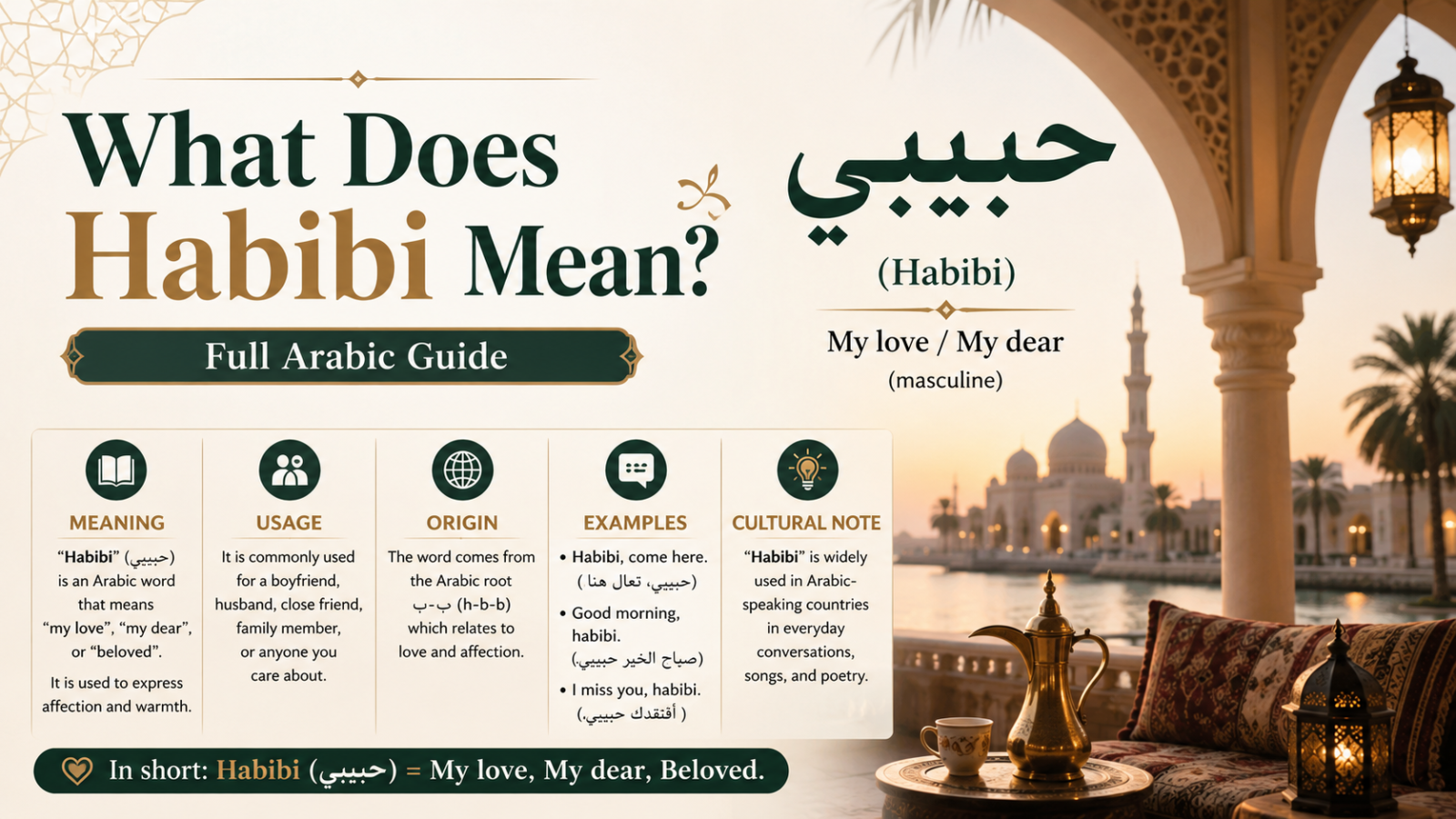
What Does Habibi Mean? The Complete Arabic Guide You Actually Need
You heard someone say “habibi” and want to know what it really means — not just a dictionary line, but how it actually feels and when to use it. Most resources give you a one-word answer and stop there. That is not enough. The habibi meaning shifts depending on who says it, to whom, and with what tone. This guide covers every variation — yalla habibi, ya habibi, wallah habibi, habibi in Hindi, and more — so you never misread the word again.
Quick Reference Table: Habibi and Its Common Phrases
| Phrase | Meaning in English | Used When |
| Habibi | My love / My dear (masc.) | Friends, family, romantic partner |
| Habibti | My love / My dear (fem.) | Addressing a woman or girl |
| Ya Habibi | Oh my dear / Oh my love | Emotional emphasis or exclamation |
| Yalla Habibi | Come on, dear / Let’s go, love | Urging someone, casual push |
| Wallah Habibi | I swear, my friend / Honestly, dear | Emphasizing truth between friends |
| Hamood Habibi | Hamood, my dear (name + term) | Calling someone named Hamood affectionately |
| Habibi in Hindi/Urdu | Mere Mehboob / Mere Pyare | South Asian emotional equivalent |
What Is the Habibi Meaning in Arabic?
The word habibi (حبيبي) comes from the Arabic root “habib,” meaning beloved or loved one. The suffix “i” means “my.” Together, habibi meaning in Arabic is “my beloved” or “my dear.”
Habibi is the masculine form. You say it to a man, a boy, or use it between close male friends. The feminine version is habibti (حبيبتي), used when speaking to a woman or girl.
But the literal meaning is just the start. In real Arabic-speaking communities — from Egypt to Lebanon, Jordan to the Gulf — habibi carries layers of warmth, familiarity, and sometimes playful sarcasm based on context.
Habibi Meaning in English: How Do You Translate It?
Translating habibi meaning in English is tricky because no single English word covers everything habibi does. The closest natural translations are:
- My love
- My dear
- Darling
- Sweetheart
- Buddy or bro (in casual male-to-male use)
Among close male friends, habibi works like “man,” “bro,” or “dude” — but warmer. Between a parent and child, it sounds like “sweetheart.” Between romantic partners, it means “my love.”
The right English translation always depends on the relationship and setting.
Ya Habibi Meaning: Why Does That Little “Ya” Matter?
Ya (يا) is a vocative particle in Arabic — it signals you are calling out directly to someone, like saying “oh” or “hey” before a name. So ya habibi meaning is “oh my dear” or “oh my love,” with a direct emotional address.
Native speakers use ya habibi in several ways:
- To express concern: “Ya habibi, are you okay?”
- As an exclamation of disbelief: “Ya habibi, I can’t believe this!”
- With tenderness toward a child: “Come here, ya habibi.”
- In songs and poetry to add emotional weight
The word ya adds intensity, not a new meaning. When you hear ya habibi instead of just habibi, the speaker is pulling you closer emotionally — whether to comfort, tease, or express genuine feeling.
Yalla Habibi Meaning: The Most Popular Combination
If you have spent any time around Arabic speakers or on Arabic social media, you have heard yalla habibi. It is one of the most used Arabic phrases worldwide, especially after it spread through pop culture and viral content.
Yalla (يلا) means “let’s go,” “come on,” or “hurry up.” Combine it with habibi and the yalla habibi meaning becomes: “Let’s go, my dear” or “Come on, love.”
How it sounds in real conversation:
- “Yalla habibi, we are going to be late!” — pushing a friend to move faster
- “Yalla habibi, eat your food.” — a parent urging a child
- “Yalla habibi!” during a game — cheering someone on
The tone can range from loving urgency to playful impatience. The warmth of habibi softens whatever yalla pushes.
Wallah Habibi Meaning: Swearing with Affection
Wallah (والله) is an Arabic oath meaning “I swear by God” or “I swear.” It signals sincerity and emphasis. Combined with habibi, the wallah habibi meaning becomes “I swear, my dear” or “honestly, my friend.”
You hear it when someone wants to make a point with genuine conviction:
- “Wallah habibi, this food is amazing.”
- “Wallah habibi, I told you not to go there.”
- “Wallah habibi, you are the best.”
It is deeply informal and personal. Saying wallah habibi to someone shows real closeness. It belongs in friendships and family conversations — not in formal settings.
Hamood Habibi Meaning: When a Name Meets a Nickname
Hamood (حمود) is a popular Arabic male name, often a nickname for Mohammad or Mahmood. When someone says hamood habibi, they are combining the name Hamood with the term of endearment habibi.
The hamood habibi meaning is simply “Hamood, my dear” — a warm, affectionate way to address someone named Hamood. It follows a common Arabic pattern of adding habibi after a name to show closeness.
This phrase appears widely in memes, viral videos, and songs — often with a humorous or nostalgic tone. It represents the blend of a classic Arabic name and the universal warmth of habibi.
Habibi Meaning in Hindi and Urdu: The South Asian Connection
Arabic words have traveled far through history — through trade, religion, and cultural exchange. The habibi meaning in Hindi is understood by many South Asian speakers, especially those familiar with Urdu, which shares significant vocabulary with Arabic.
The closest equivalent phrases in Hindi and Urdu are:
- Mere Mehboob (میرے محبوب) — my beloved
- Mere Pyare (میرے پیارے) — my dear
- Jan (جان) — life, used the way habibi is used in Arabic
When Hindi-speaking audiences hear habibi in Arabic songs or films, they naturally connect it to these Urdu-origin words. The emotional meaning transfers perfectly even when the language does not. This is one reason habibi became so popular in Bollywood music and South Asian pop culture — it sounds familiar, romantic, and universally warm.
Habibi vs Habibti: Getting the Gender Right
One of the most common mistakes Arabic learners make is using habibi when they should say habibti. The rule is simple:
- Habibi (حبيبي) — use when speaking to or about a male
- Habibti (حبيبتي) — use when speaking to or about a female
The gender in the word matches the person being addressed, not the speaker. A man can call a woman habibti. A woman can call a man habibi. Getting this right shows respect for the language and avoids awkward moments.
When NOT to Use Habibi: Cultural Context You Must Know
Habibi is warm and flexible, but it has limits. Knowing when not to use it matters just as much as knowing when to use it.
Avoid it in formal settings. Do not address a manager, professor, client, or government official as habibi. It signals informality that can undermine professional respect.
Think twice with strangers. Saying habibi to a stranger — especially across genders in conservative contexts — can come across as presumptuous. It depends on the country and setting. Lebanon and Egypt are more relaxed about it; some Gulf countries require more caution.
Sarcastic habibi is real. A native speaker can say habibi with a flat or cutting tone during an argument, and it no longer means affection. It means: “Listen here.” or “Pay attention.” The word stays the same — the tone does everything.
Why Habibi Became a Global Word
No other Arabic word has traveled quite as far as habibi. It shows up in international music, memes, YouTube thumbnails, social media captions, and conversations between people who have never studied Arabic.
Several factors drove this:
- Arabic music and artists — from Nancy Ajram to Amr Diab — made habibi a staple of global pop
- Social media gave it a playful, meme-friendly identity
- Its sound is naturally appealing — soft, rhythmic, and easy to say
- Its meaning is universal — every culture has a concept of calling someone “my dear”
When someone uses habibi outside of Arabic, they are borrowing that warmth on purpose. They want the emotion the word carries, not just the translation.
How to Use Habibi Naturally in a Conversation
Using habibi naturally means matching it to the right context, relationship, and tone. Here are real situations where it fits:
- With a close friend: “Habibi, where have you been? I missed you.”
- Comforting someone: “It’s okay, habibi. Things will get better.”
- Lively teasing: “Ya habibi, you truly believed that was a good idea?”
- Talking to a child: “Come here, my habibi.”
- Romantic message: “Thinking of you, habibi.”
- Cheering a friend on: “Yalla habibi, you’ve got this!”
Avoid dropping habibi into every sentence just because you learned it. Native speakers use it when they feel it. Let the emotion guide when you reach for the word.
Frequently Asked Questions About Habibi Meaning
Q1: What does habibi mean exactly? Habibi is an Arabic term of endearment meaning “my beloved” or “my dear.” The habibi meaning shifts by context — it can mean “my love” in a romantic exchange, “my friend” between buddies, or “darling” from a parent to a child.
Q2: Is habibi only used in romantic relationships? No. Habibi is just as common between friends, siblings, and family members. The term itself is neutral — the partnership provides it their meaning.
Q3: What is the difference between habibi and habibti? Habibi is masculine, used when addressing a male. Habibti is feminine, used when addressing a female. What matters is who you are speaking to, not the speaker’s own gender.
Q4: What does yalla habibi mean in English? Yalla means “let’s go” or “come on.” The yalla habibi meaning in English is “let’s go, my dear” or “come on, love” — a warm push that moves someone forward while still showing affection.
Q5: Can non-Arabs use habibi? Yes, and many do. When used genuinely and respectfully, habibi is welcomed. Just avoid it in formal situations or with people who may not know you well.
Q6: What does wallah habibi mean? Wallah means “I swear by God.” The wallah habibi meaning is “I swear, my dear” — used to emphasize honesty or strong feeling in a close, informal relationship.
The habibi meaning Is More Than a Word
The habibi meaning is not fixed to one English translation. It is a feeling — warmth, closeness, trust, and affection packed into six letters. Whether someone says ya habibi with tears in their eyes, yalla habibi with a laugh, or wallah habibi with total conviction, each version carries its own emotional charge.
Learning habibi is about understanding the culture behind it — one that values warmth in everyday speech and shows love openly. The next time you hear habibi, you will know exactly what it means. And now you know when to say it yourself.