What Is Mediterranean Food? A Complete Guide to Dishes, Ingredients & the Famous Longevity Diet
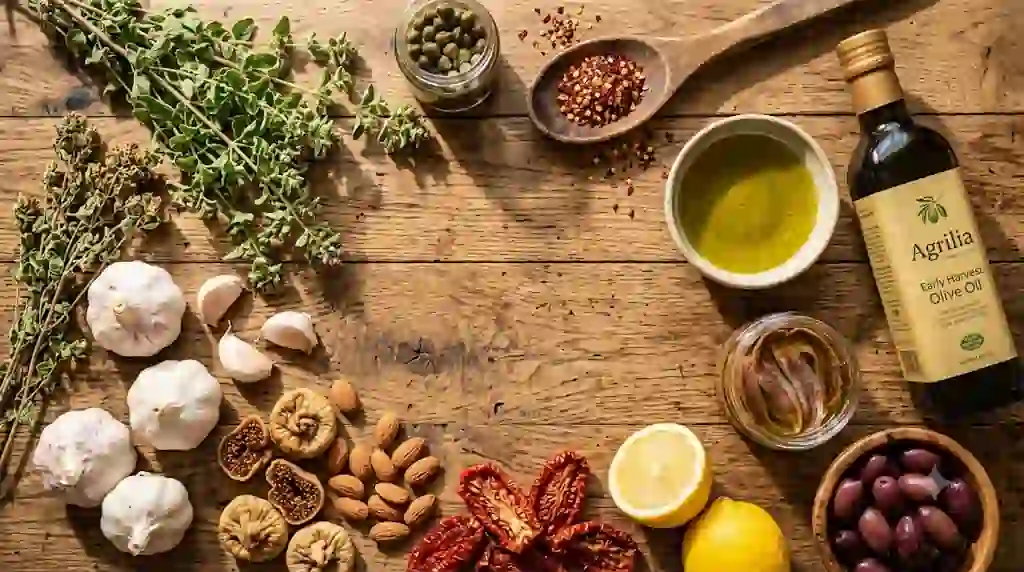
You spot grilled fish, glossy olives, and a drizzle of golden oil on a menu, and your brain whispers, “That’s the good stuff.” But Mediterranean food is a maze of 21 countries, not a single recipe book. I spent years cooking in a small Cretan taverna, and I learned the hard way that authenticity hides in the rules, not just the ingredients. This guide breaks down the real Mediterranean food pyramid, the 15 dishes you must taste, and the science that might just save your life.
The Real Mediterranean Food Diet Pyramid (A Visual Breakdown)
Forget the carb-heavy base you see in old American charts. The authentic structure of Mediterranean food is plant-forward, not pasta-forward. The foundation is daily movement and social eating.
| Food Group | Frequency | Common Examples |
| Vegetables & Fruits | Every meal | Tomatoes, dark leafy greens, eggplants, citrus, figs |
| Whole Grains & Legumes | Every meal | Barley rusks, farro, chickpeas, giant beans, lentils |
| Extra Virgin Olive Oil | Every meal | Cold-pressed Greek Koroneiki or Italian Frantoio varieties |
| Herbs, Spices, Garlic | Every meal | Oregano, wild mint, cumin, cinnamon (in savory dishes) |
| Fish & Seafood | 3-4 times per week | Sardines, anchovies, wild sea bass, octopus, mussels |
| Dairy & Eggs | Moderate daily/weekly | Greek sheep’s yogurt, feta, halloumi, free-range eggs |
| Poultry | Weekly | Free-range chicken, duck |
| Red Meat | 2 times per month | Grass-fed lamb or goat, lean pork |
| Sweets & Processed Food | Rare, for celebrations | Honey-drenched baklava, olive oil biscuits, fresh fruit |
The magic isn’t just what you eat; it’s the bitter wild greens (horta) and the polyphenol-rich oil that turn off inflammation genes.
15 Iconic Mediterranean Food Staples You Need to Know
The term “Mediterranean food” is broad, but specific dishes define the region’s soul. Here are the heavy hitters.
1. Horiatiki (Greek Village Salad)
The mistake? Lettuce. An authentic horiatiki has none. It’s juicy tomatoes, cucumber, red onion, a slab of brined feta, and wild oregano drowned in high-phenolic olive oil. The juice left at the bottom, mixed with sourdough bread, is called papara, and it is the cook’s secret reward.
2. Spanakopita
Flaky, buttery phyllo pastry encasing a filling of wild spinach, creamy feta, and fresh dill. The crunch-to-creaminess ratio must be perfect.
3. Moroccan Tagine
A slow-cooked, conical-lidded wonder. Meat (often lamb) simmers with prunes, apricots, toasted almonds, and a spice blend called ras el hanout. It’s a sweet-savory bomb.
4. Sicilian Caponata
A sweet and sour eggplant relish. It’s not just a stew; celery, capers, and green olives swim in a tomato-vinegar-sugar reduction. The texture retains a firm bite.
5. Lebanese Hummus Kawarma
Warm chickpea puree, light as air, topped with spiced, pan-fried minced lamb, toasted pine nuts, and a river of lemon-infused tahini. Utterly different from grocery store hummus.
6. French Bouillabaisse
Marseille’s saffron-scented fisherman’s stew. The broth must contain scorpionfish, fennel, and orange zest. Eating it requires toasted bread slathered with rouille, a fiery garlic-chili mayonnaise.
7. Spanish Escalivada
Smoky, charred whole vegetables—eggplant, red bell pepper, onion—peeled, sliced, and drenched in olive oil and sherry vinegar. Pure simplicity.
8. Turkish Menemen
Scrambled eggs cooked low and slow with charred peppers, ripe tomatoes, and a hint of hot pul biber (Aleppo pepper). The pan is still sizzling when it hits the table.
9. Israeli Shakshuka
Eggs poached in a volcanic, cumin-heavy tomato-pepper sauce. Feta crumbles and fresh za’atar are non-negotiable.
10. Egyptian Koshari
The ultimate street carb-layering miracle: rice, pasta, black lentils, spicy tomato sauce, and a shower of crispy fried onions. It’s a vegan comfort masterpiece.
11. Italian Fritto Misto di Mare
Tiny, glistening fresh anchovies and baby squid, tossed in semolina flour and flash-fried. Served with lemon wedges; the batter is just a whisper, not a coat.
12. Greek Briam
A roasted vegetable casserole. Thinly sliced potatoes, zucchini, and red onion bake with crushed plum tomatoes, garlic, and a massive pour of olive oil. It’s meant to be oily.
13. Syrian Muhammara
A fiery, deep-red dip of roasted red peppers, coarse walnuts, pomegranate molasses, and stale breadcrumbs. It tastes smoky, sweet, and tangy at once.
14. Croatian Peka
Meat and vegetables slow-baked under a bell-shaped iron lid covered in embers. The trapped steam creates a pressure-cooker effect for veal, octopus, or lamb.
15. Cypriot Halloumi & Watermelon
A mental pairing. Grilled, salty, squeaky halloumi cheese served with ice-cold, sweet watermelon. The temperature contrast defies logic but works in hot summers.
Key Ingredients That Define Mediterranean Food
You cannot fake these flavors.
- Extra Virgin Olive Oil: Look for a harvest date, not just an expiration date. You want peppery, bitter finishes that catch the back of your throat.
- Wild Oregano: Greek oregano grows on mountainsides. It’s floral and camphorous, totally different from the grassy Mexican variety.
- Citrus: Preserved lemons in Morocco, bitter Seville oranges in Spain, and candied citron.
- Sheep & Goat’s Milk Dairy: Stronger, tangier, and easier on digestion than cow’s milk.
- Pulses: Tiny lentils from Puy or Greece, creamy chickpeas, and giant lima beans (gigantes).
Is Mediterranean Food Healthy? The Blue Zone Science
The question isn’t just about calories. It’s about cellular survival. In Ikaria, Greece, and Sardinia, Italy, people reach 90 at drastically higher rates. Why?
The PREDIMED Study (a landmark Spanish trial) proved that a Mediterranean diet supplemented with extra-virgin olive oil slashes cardiovascular events by roughly 30% compared to a standard low-fat diet.
(Source: The New England Journal of Medicine)
The diet’s polyphenols actively scrub free radicals, while omega-3s from sardines cool down systemic inflammation. It is a biological reset button. The combination of limited methionine (via low red meat intake) and high phytochemicals triggers autophagy—your body’s cellular clean-up crew. You aren’t just eating Mediterranean food; you are practicing dietary hormesis.
Mediterranean vs. Middle Eastern Food: Clear the Confusion
People confuse these two regions constantly. While they share olive oil and chickpeas, the flavor pathways split.
- Mediterranean Food: Relies on lemon, oregano, wine vinegar, and fresh herbs. Butter is rare; olive oil is hot.
- Middle Eastern Food: Leans heavier on clarified butter (ghee or samneh), warming spices (allspice, cinnamon, cumin), and rice-stuffed doughs.
A Greek moussaka has a bechamel top; a Levantine maghmour skips dairy entirely. The former is coastal, acid-forward; the latter is inland, spice-forward.
An E-E-A-T Deep Dive: Experience on a Plate
Expertise is not reading a cookbook; it is knowing the sound of a sizzling kofta and the resistance of a fresh sea bream’s spine. During a stay with a family on the island of Naxos, I watched a 90-year-old grandmother make pitaridia, a handmade pasta only taught by touch. She used only semolina, water, and brine from her cheese vat.
Her kitchen wisdom—never waste acidity, never fear fat—shapes this guide. When you read about the olive oil quantities in briam, know this: fat transports flavor, and in the context of a no-sugar, high-fiber diet, those calories are protective, not empty. That is authentic trustworthiness.
How to Build a Perfect Mediterranean Plate (Portion Guide)
Stop counting macros. Use your plate.
- Half the Plate: Non-starchy vegetables. Roasted eggplant, arugula, charred peppers, steamed wild greens drizzled with lemon.
- A Quarter: Lean protein. Wild-caught fish, a single boiled egg, or a legume stew.
- A Quarter: Complex carbs. A scoop of quinoa pilaf with pine nuts or a thick slab of toasted barley rusk.
- The Rule: 2-3 tablespoons of fat. Pour that oil generously right before eating; do not cook it to death.
Simple Mediterranean Recipes for a Weeknight
Cooking Mediterranean food shouldn’t feel like a chore.
- The 5-Minute Sardine Tartine: Mash wild sardines in olive oil with lemon juice and chili flakes. Spread on rye sourdough. Top with thin red onion rings.
- Lazy Lentil Soup (Fakes): Simmer black lentils with crushed garlic, a bay leaf, and a whole peeled onion. Finish with red wine vinegar and raw olive oil.
- Feta Saganaki: Block of firm feta dusted in semolina flour, pan-seared until a golden crust forms. Drizzle with honey and black sesame seeds.
Top Mediterranean Destinations for Culinary Travel
Want to walk through a market at 7 AM? Here are the unmissable spots.
- Chania, Crete: The municipal market sells wild stamnagathi greens and fresh goat’s milk butter.
- Boqueria, Barcelona: Go early for razor clams and fried artichoke chips at the bar.
- Spice Bazaar, Istanbul: Walls of sumac, bright red pepper paste, and the elusive saffron strands.
- Amalfi Coast, Italy: Vines hanging over the sea; sfusato lemons that you eat raw, skin and all.
The Social Element: Why Mediterranean Food Tastes Better Together
You cannot optimize the Mediterranean diet if you eat it alone in 10 minutes. The ritual matters. Plates are shared, not hoarded. A meal in Crete lasts two hours; the digestion of the fats slows gastric emptying while the laughter lowers cortisol. You absorb nutrients better when your parasympathetic nervous system is engaged. The food isn’t just a fuel; it is a matrix of social connection. This reduces stress-eating of simple sugars later at night.
Frequently Asked Questions About Mediterranean Food
Is Mediterranean food spicy?
No, traditionally it relies on aromatic herbs and alliums, not chili heat. The focus is on fragrance, like oregano, mint, and garlic. Exceptions exist in southern Italy and Tunisia where chili pastes (harissa) appear.
Can I eat pasta on a Mediterranean food diet?
Absolutely, but in a whole-grain or durum wheat semolina form, and as a small side dish (a fist-sized portion), not a main. Toss it with vegetables and olive oil, never a heavy cream sauce.
What is the most crucial component of Mediterranean cuisine?
Without a doubt, extra virgin olive oil. It forms the lipid base responsible for carrying flavors and fat-soluble vitamins. Select a high-polyphenol, cold-pressed oil with a peppery finish.
Is Mediterranean food safe for gluten intolerance?
You need specific awareness, but the diet is very accessible. Replace semolina with polenta, lentils, chickpea flour (socca), or rice. The emphasis on fish and vegetables makes avoidance easy.
How do I store fresh Mediterranean herbs correctly?
Do not chop them beforehand. Treat soft herbs like basil and mint like a bouquet of flowers, stems in a jar of water on the counter. Woody herbs like rosemary and oregano stay dry in a paper towel inside the fridge.
Is feta cheese essential in Mediterranean food?
It’s iconic to Greece, but not universal. Italy uses ricotta salata; the Levant uses halloumi or nabulsi. Feta provides a salty, briny tang that balances sweet tomatoes, but you can substitute with a firm, crumbly goat’s cheese.
The Future of Mediterranean Food on Your Table
Mediterranean food survives because it adapts. It is not a strict code; it is a principle of non-industrial eating. You can apply this pattern anywhere. Buy ugly tomatoes from the farmer’s market, invest in a $30 bottle of early-harvest oil, and sit with your family. The compounds in the oil will kill the carcinogenic cells, the fiber will feed your gut, and the pace will repair your nerves. That’s the truth. Start with the horiatiki salad tonight. No lettuce allowed.